
Announcing H-E-B Big 'n Tall
There’s no denying things are bigger in Texas, and H-E-B—the beloved San Antonio-based supermarket giant—has decided to lean into that…
Announcing H-E-B Big ’n Tall, their new Hill Country concept store tailored to an obese clientele.

“Standard nutritional labels are useless for the average fatty-patty,” explains overweight customer Linda Montgomery. “A typical label might list 80 calories but that’s a seven-ounce serving. I eat that on the way to getting snacks. There’s a bowl of Peanut M&M’s in our hallway meant for guests. When I walk to the bathroom I usually grab a handful in each direction. Seven ounces is a rounding error. Finally, there will be a store that will cater to big-boned people.”
The retail experience will feel distinctly different from the moment shoppers arrive. To start, the parking lot isn’t in front of the building—it’s located a block away, guaranteeing customers get some much-needed cardio.
Once inside, the pricing structure flips traditional grocery math on its head. Products aren’t priced by the weight of the item. They are priced according to your weight.
Instead of confusing calorie counts and daily percentage values, item packaging will feature a simple chart labeled: “Can I Eat This?”
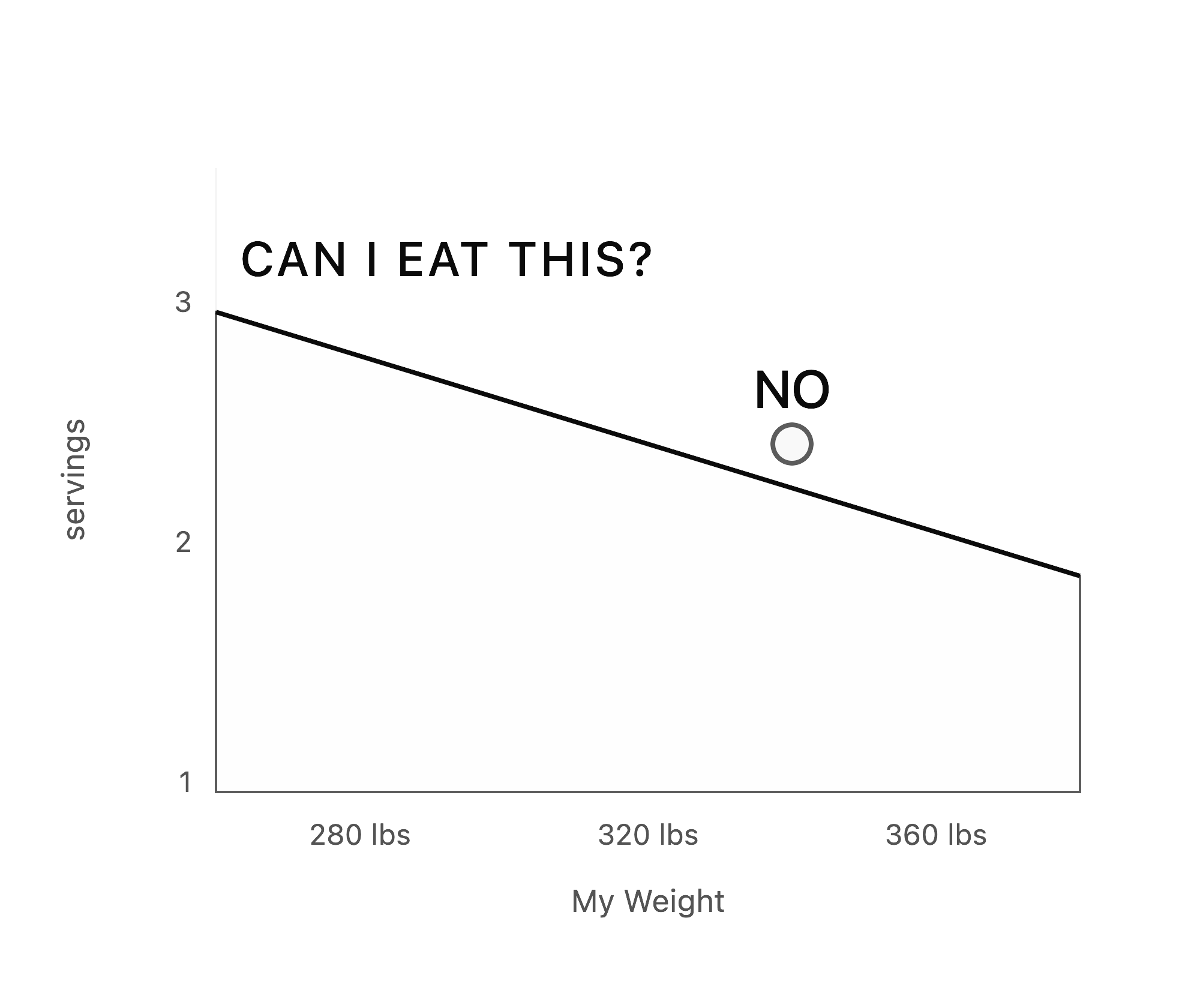
To use it, shoppers cross-reference their body weight against the total number of servings they’re willing to consume before catching their reflection in the microwave door. If the intersecting point lands in the upper “red zone”, the answer is no. You cannot buy it. Put the queso back and find an item in the lower, “green zone.”
The personal-accountability model extends to the deli counter…
“Most overweight people are terrible at judging volume,” says Store Manager Julie Sender. “They don’t know if they need a pint of tuna salad or a gallon. At Big ’n Tall, you simply walk up to the counter, tell the clerk what you want, and show ‘em an official ID that lists your weight. The counter-person then determines your portion. If you feel you didn’t get enough potato salad, there is an appeals process but you must be willing to do a quick lap around the building.”
Ms. Sender admits the concept isn’t without logistical hurdles.
“Our two biggest concerns are customers presenting fake IDs with a lower weight, and loitering,” Sender explains. “If someone gets turned away at the deli counter, we don’t want them hanging around the front doors like teenagers outside a liquor store: ‘Hey man, if I give you twenty bucks, will you buy me two pounds of chicken salad? It’s for a party. I swear.’”
Experimental supermarket concepts are not a new thing. Last year Erewhon, the ultra-luxury natural foods chain in Los Angeles, tested an entry fee at their Hollywood location. “Everyone in Hollywood is an actor on some keto air-diet. They don’t buy food,” explains local resident Dirk Brockston. “To them, a supermarket is what a zoo is to us. We go to the zoo to see tigers in a cage; actors go to the supermarket to see bread. You’ll see a couple looking at a loaf of sourdough, ‘Can you believe people put that in their bodies? Let’s go look at the gluten.’”
Billiam Coronel is a multiple Emmy-winning comedy writer who now lives in the Texas Hill Country. He was on The Tonight Show multiple times and wrote on a dozen sitcoms including FAMILY GUY.
I’ve been to HUB and I don’t recall any of this. So it’s new?
“If you feel you didn’t get enough potato salad, there is an appeals process.” Stick a fork in me!